
Yamaha FZ V2 Review: The Everyday Naked Bike That Still Makes Sense
This is a research-backed first draft. Personal riding notes and a video review will slot in later, see the placeholder section at the bottom.
The Yamaha FZ V2 doesn't need much of an introduction, it's one of the most familiar 150cc naked bikes on the road, especially across South Asian markets like Sri Lanka and India. It never chased spec-sheet bragging rights. Instead it built a reputation as the naked streetfighter you buy when you want something that looks good, feels light in traffic, and doesn't demand much in return.
This review covers the design, engine, ride quality, running costs, and how it stacks up against rivals like the Bajaj Pulsar 150 and Suzuki Gixxer, based on official specs, long-term test data, and real owner feedback.
Design & First Impressions
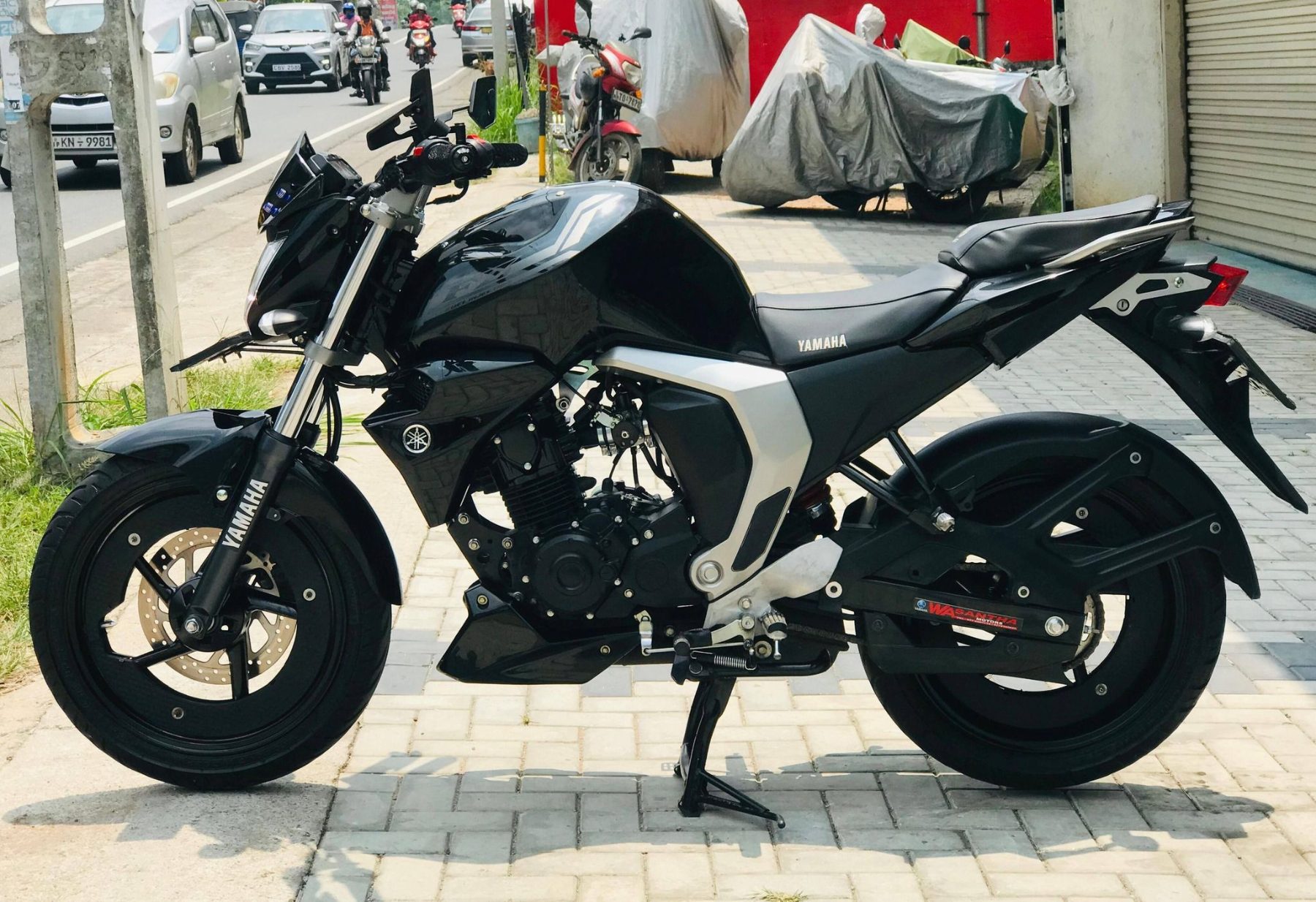
The FZ V2 kept the design language that made the original FZ a hit: a muscular fuel tank, a beefy 140mm rear tyre that looks disproportionately wide for a 150cc bike, and an upright, minimal stance. It reads as a naked streetfighter rather than a commuter, and owner reviews consistently call it a "good looking naked street bike" with a premium feel that still turns heads years after launch.
The V2 update brought a digital instrument cluster and refined switchgear over the original FZ, though it stopped short of full connectivity features, no Bluetooth, no ride modes, nothing app-linked. In an era where even budget commuters ship with connected dashboards, the FZ V2's instrumentation feels dated, and some owners report the digital cluster becoming unreliable over time.
Build quality is a mixed bag: the metal components hold up well, but body panels are plastic and owners note they "break easily in minor falls or tip-overs," which matters more in dense city traffic than it would on the highway.
Engine & Performance
The FZ V2 runs a 149cc, air-cooled, fuel-injected SOHC single putting out roughly 13-13.2 PS at 8,000 rpm and 12-12.8 Nm of torque at 6,000 rpm, through a 5-speed gearbox. On paper that's modest even for the 150cc class, and it feels that way in practice too.
What it does well is low-end response. Long-term testers describe "good low-end punch" that makes it easy to filter through traffic, and one 2.5-year owner called it "one of the best refined engines" in this segment, smooth even at sustained highway speeds. Where it falls short is outright pace: testers are blunt that it's "not the bike to set your pulse racing on highways," and pickup gets noticeably softer with a pillion on board.
In short: it's tuned for commuting, not overtaking. If you're comparing it against something like the Suzuki Gixxer or a 160-180cc rival expecting similar punch, you'll notice the gap the moment you open the throttle past 60 km/h.
Ride Quality, Comfort & Handling
This is where the FZ V2 earns most of its praise. At 132 kg kerb weight and with a 790mm seat height, it's light and easy to tip into corners, and the wide rear tyre gives it a planted, stable feel that punches above its engine size. Long-term reviewers noted an "ultra smooth ride experience" with stability holding up even at highway speeds, and owners consistently rate handling and cornering ability as a strong point, particularly useful for weaving through city traffic.
Seat comfort exceeds what you'd expect from a commuter-class bike, with semi-soft cushioning and an upright riding posture that's kind to your back and wrists on longer rides. Ergonomics are described as "clever," with controls that fall naturally to hand.
The trade-off is at the rear: the drum brake and simpler rear suspension setup mean it's not going to feel as composed as bikes with rear discs and monoshock setups when pushed hard. For daily riding and weekend trips, though, it's a comfortable, confidence-inspiring bike rather than a twitchy one.
Fuel Economy & Running Costs
ARAI-rated mileage sits between 55-58 km/l, but that's a lab figure. Real-world numbers from long-term owner testing average closer to 42 km/l in mixed riding, ranging from about 38.9 km/l in heavy traffic up to 48.5 km/l on steady, sub-70 km/h runs. Owner-reported averages on review sites land around 45 km/l, which is a reasonable middle ground and roughly in line with (sometimes slightly behind) 150cc rivals like the Pulsar 150.
Running costs are where the FZ V2 quietly wins. A paid service has been reported as low as around Rs. 475, chain adjustment intervals stretched past 3,500 km in testing, and brake caliper wear after 4,000+ km suggested a working life well beyond 9,000 km. That said, other owners report needing chain sprocket replacement as early as 6,000 km and tyres wearing faster than expected, so maintenance costs can vary depending on riding style and how well the chain is lubricated and maintained.
Braking, Tyres & Safety
This is the FZ V2's weakest area, and worth being upfront about if you're cross-shopping it in 2026. It runs a single hydraulic disc up front and a mechanical drum at the rear, with no ABS on most variants, a real gap against newer 150cc rivals that now ship dual-channel ABS as standard. Owner feedback echoes this: one long-term owner specifically flagged "poor stopping power" and front-tyre skidding under hard braking.
On the plus side, the wide 140/60-R17 rear tyre delivers genuinely good grip and stability in corners and under acceleration, which partly offsets the braking limitations in normal riding. Just don't expect the fade resistance or bite of a bike with dual discs and ABS if you ride aggressively or carry a pillion regularly.
Full Specifications
Engine: 149cc, air-cooled, SOHC, single-cylinder, fuel-injected
Max power: 13-13.2 PS @ 8,000 rpm
Max torque: 12-12.8 Nm @ 6,000 rpm
Transmission: 5-speed manual, chain drive
Mileage (ARAI): 55-58 km/l
Mileage (real-world): ~42-45 km/l
Kerb weight: 132 kg
Seat height: 790 mm
Ground clearance: 160-165 mm
Wheelbase: 1,330 mm
Fuel tank: 12 litres
Front brake: Hydraulic disc
Rear brake: Mechanical drum
ABS: Not available on most variants
Front tyre: 100/80-17
Rear tyre: 140/60-R17
Suspension (front): Telescopic fork
Suspension (rear): Monocross swingarm
Specs compiled from Yamaha's official Sri Lanka listing and independent spec databases; minor variation exists between regional variants and model years.
How It Compares to Rivals
Power: FZ V2 ~13 PS vs Pulsar 150 ~14 bhp vs Gixxer ~14.6 PS
Mileage (claimed): FZ V2 55-58 km/l vs Pulsar 150 ~48 km/l vs Gixxer ~44 km/l
ABS: FZ V2 no (most variants) vs Pulsar 150 no (base variants) vs Gixxer optional on higher variants
Instrument cluster: FZ V2 digital, no connectivity vs Pulsar 150 LCD, some with Bluetooth vs Gixxer digital, some connected
Character: FZ V2 comfort-focused, stable handling vs Pulsar 150 budget-friendly, long-standing reliability reputation vs Gixxer sportier edge, sharper handling
Against the Pulsar 150, the FZ V2 wins on fit-and-finish, resale value, and handling feel, it consistently pulls stronger user ratings for comfort and build quality, but loses on raw power and, on some newer Pulsar variants, features like Bluetooth connectivity.
Against the Gixxer, the FZ V2 feels more relaxed and comfort-oriented; the Gixxer generally edges it out on sportier handling and outright performance. If you want a bike to carve through corners aggressively, the Gixxer or an FZ25 (Yamaha's own 250cc sibling) are worth cross-shopping. If daily comfort and low running costs matter more than outright pace, the FZ V2 still holds its ground.
Common Owner Complaints: Things to Watch
Across owner reviews and long-term tests, a few recurring issues show up often enough to flag before you buy or if you already own one:
Tyres wear faster than expected for the class, especially the rear, so factor replacement into your running costs sooner than you might with a Pulsar.
Chain and sprocket wear varies a lot by unit and maintenance habits: some owners get past 3,500 km before adjustment is needed, others need a sprocket replacement by 6,000 km. Regular chain lubrication (spray, not oil) is the difference-maker owners point to.
Digital instrument cluster reliability has been flagged as inconsistent on some units, intermittent malfunctions, not universal, but common enough to check before buying used.
Plastic body panels crack or break easily in minor tip-overs or low-speed falls, which is a real cost consideration in dense city riding.
No ABS on most variants is the single biggest safety gap versus newer competitors, worth factoring in if you ride in wet conditions or heavy traffic often.
Pricing in Sri Lanka
The FZ V2 is listed at roughly Rs. 720,000-950,000 in the Sri Lankan market, depending on condition, variant, and whether it's new or used (the model has been discontinued as a new release in some markets, including India, so most units in circulation now are used or grey-imported). It holds resale value unusually well for the segment, around 55% after three years, which softens the total cost of ownership even if the upfront price feels high for a 150cc naked with no ABS and a drum rear brake.
Prices shift often, check current listings on ikman.lk or riyasewana.com before treating this figure as final.
Verdict: Who Should Buy It
The FZ V2 is a bike built around comfort, resale value, and everyday usability rather than performance. It suits riders who want a naked bike that looks sharp, handles well in traffic, is cheap to run, and holds its value, not riders chasing acceleration numbers or the latest safety tech.
Buy it if: you want a comfortable daily commuter with strong resale value and don't mind the lack of ABS and connected features.
Look elsewhere if: you want dual-channel ABS as standard, stronger outright performance, or modern connectivity, in which case the Gixxer, a newer Pulsar variant, or Yamaha's own FZ25/FZ-X are worth a look.
Sources
MotorGuide.lk: FZ V2 2025 specs, features, price - https://motorguide.lk/en/reviews/bikes/yamaha-fz-v2-2025
Yamaha Sri Lanka: official FZ V2 page - https://yamaha.lk/fz-v2/
BikeWale: FZ V 2.0 specifications - https://www.bikewale.com/yamaha-bikes/fz-v-2/specifications-features/
91Wheels: FZ S FI V2.0 specifications - https://www.91wheels.com/bikes/yamaha/fz-s-fi-v-2-0/specifications
MotorBeam: FZ-S V2 long-term review, final report - https://www.motorbeam.com/yamaha-fz-v2-long-term-review-final-report/
BikeWale: Pulsar 150 vs FZ S V2.0 comparison - https://www.bikewale.com/compare-bikes/bajaj-pulsar-150-vs-yamaha-fz-s-v-2/
BikeWale: owner review, 2.5 years / 15,000+ km - https://www.bikewale.com/yamaha-bikes/fz-s-v-2/reviews/162767/