
Monsoon Car Care: Protecting Your Vehicle Through Sri Lanka's Rainy Season
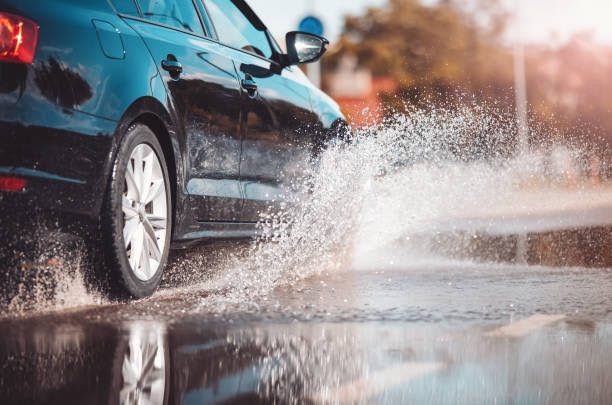
Sri Lanka doesn't really have a single dry season and a single rainy one, it has two monsoons, the Yala from May to August and the Maha from October to January. That means most drivers here spend a big chunk of the year dealing with standing water, humidity, and sudden downpours. Cyclone Ditwah in late 2025 was a stark reminder of how serious flooding can get here, and while most rainy days are nowhere near that scale, the basic risks to your car are the same every year.
Before the rains start
Check your wiper blades. Heat and sun exposure through the dry months leaves them cracked and streaky. If they're leaving marks or chattering across the glass, replace them, they're cheap and it's the single most important thing for visibility in heavy rain.
Check tyre tread depth. Worn tyres lose grip fast on wet roads and are the main cause of aquaplaning, where the tyres ride on a film of water and steering stops responding.
Clean and check battery terminals. Humidity speeds up corrosion, and batteries already work harder in the rain since headlights, wipers, and demisters run more often.
Check for condensation inside your headlights. If the housing fogs up on the inside, the vents are blocked, and it'll dim your lights right when you need them most.
If you come up on standing water
The safest option is always to turn around and find another way. If you genuinely can't avoid it, a rough rule of thumb is to compare the water level against the kerb or footpath, usually around 10-20cm high. If the water is at or above that level, don't risk it. If it's genuinely shallow, cross slowly and steadily in a low gear, keep the engine revs up, and never let the car come to a stop halfway through.
If your car has already taken on water
If your car has stalled in deep water or been sitting in a flooded area, do not try to start it, even if it seems fine. Water in the engine can bend a connecting rod or crack the block if you try to run it, turning a simple clean-up into a full engine rebuild. Get it towed to a mechanic instead, and call your insurer before anyone touches it.
Driving Safely Once the Rain Starts
Turn your headlights on in heavy rain even during the day. Sri Lankan roads mix cars, three-wheelers, motorbikes, and pedestrians in tight space, and low visibility makes every one of them harder to see in time. Leave more room than usual to the vehicle in front, since wet roads roughly double your stopping distance, and standing water hides potholes that are easy to spot when the road is dry.
If the windscreen starts fogging up, point the AC at the glass rather than just cranking the fan, since blowing warm dry air at the windscreen clears it faster than blasting the cabin. Avoid sudden braking or sharp steering on flooded or wet tarmac, since that's when a car is most likely to aquaplane and lose contact with the road entirely. None of this is complicated, but a five-minute pre-monsoon check and a bit of caution on the road is what separates a routine rainy season from an expensive one.